2026 Best Signs of a Failing Turbo Oil Pipe?

Time:2026-09-24 Author:Sophia
0%

A failing turbo oil pipe can turn a healthy engine into a smoky, noisy, and expensive problem. The pipe supplies pressurized oil to the turbocharger’s bearings and carries hot oil away. When flow becomes restricted, the turbo may lose lubrication within minutes. What are the signs of a failing turbo oil pipe? Watch for blue exhaust smoke, oil around the turbo housing, rising oil consumption, whining sounds, and slower acceleration.

Garrett Motion’s turbocharger installation guidance identifies oil starvation, contamination, and restricted drain flow as major causes of turbocharger damage. MAHLE Aftermarket’s turbocharger damage analysis also links blocked oil passages with bearing wear, overheating, and shaft failure. These findings matter because a small carbon deposit can resemble a simple gasket leak. It may not be simple. A crushed pipe, hardened seal, loose fitting, or sludge-filled return line can create similar symptoms.

Look closely.

A mechanic may find fresh oil near the feed connection, while the real blockage sits inside the pipe. A flashlight, clean gloves, and a cold-engine inspection can reveal wet joints or burnt residue. However, visual checks cannot confirm oil pressure or internal restriction. Professional diagnosis should include oil-level verification, pipe inspection, pressure testing, and turbocharger shaft assessment. Do not assume every whistle means turbo failure. Intake leaks, exhaust leaks, and worn bearings can sound alike. Service records, engine mileage, oil quality, and driving conditions should guide the conclusion. Some symptoms overlap, and that uncertainty deserves attention.
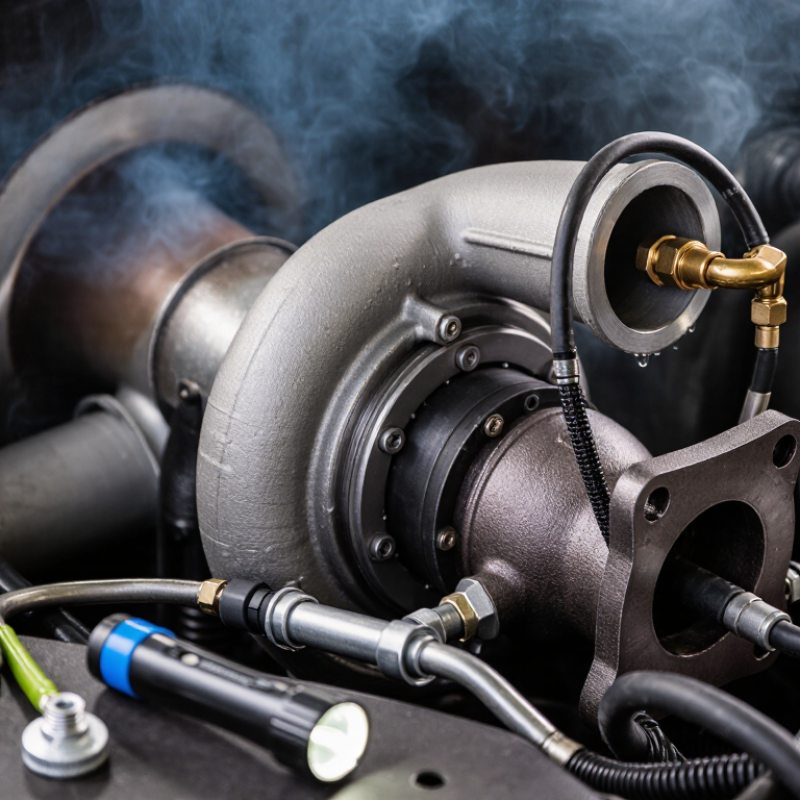
2026 Best Signs of a Failing Turbo Oil Pipe?

Common Symptoms of a Failing Turbo Oil Pipe

A failing turbo oil pipe may leave clues before the turbo stops working. Look for fresh oil around the pipe joints, turbocharger, or nearby engine surfaces. A small wet patch can become a dark, sticky buildup as dust collects. You might also notice falling oil levels between routine checks. Check the dipstick on level ground, with the engine off and cool.

Smoke can be another warning. Blue-gray exhaust, especially after idling or acceleration, may indicate oil is entering the exhaust stream. A burning-oil smell near the engine deserves attention, too. Some drivers hear a faint hiss or notice reduced boost, but these signs can have other causes. Symptoms overlap. A leaking pipe is only one possibility, and guessing from sound alone can lead you astray. If the leak is heavy, or the oil-pressure warning appears, stop safely and arrange an inspection. Low oil can damage the engine and turbo quickly.

Tips: With the engine cool, use a flashlight to inspect visible pipe connections for dampness or fresh residue. Don’t touch hot components or crawl under an unsupported vehicle. Note smoke color, oil use, and when symptoms occur; those details help a qualified mechanic trace the source. Even a tiny leak deserves a second look.

2026 Best Signs of a Failing Turbo Oil Pipe

Common symptoms can include oil leaks around the turbo oil lines, blue exhaust smoke, a burning-oil smell, and turbo noise or reduced performance. These signs can have other causes, so inspect the oil supply and return pipes before replacing parts.

Relative urgency is an illustrative troubleshooting guide, not measured failure-frequency data or a vehicle-specific diagnosis. A visible oil leak or sudden loss of oil pressure warrants prompt inspection.

How to Identify Oil Leaks Around the Turbocharger

Oil around a turbocharger does not always mean the turbo itself has failed. A light film near a hose joint may come from a loose fitting, a hardened seal, or oil spilled during servicing. Check the area with the engine cool and switched off. Use a flashlight to inspect the oil feed line above the turbo and the larger return pipe below it.

Look for fresh, wet oil rather than old, dark residue. A clean paper towel can help trace where the leak begins. Be careful: airflow can spread oil across nearby surfaces, making the source hard to judge. That part can be frustrating. After cleaning the area, run the engine briefly, then inspect again without touching hot components. Oil collecting around a return-pipe connection may point to a damaged seal, a restricted drain, or excessive crankcase pressure—not necessarily a cracked pipe. Watch for a falling oil level, a burning-oil smell, or blue-gray exhaust smoke, and note when each symptom appears. If oil is dripping onto hot parts, or the leak returns quickly, avoid extended driving and have a qualified technician check the lines, seals, and crankcase ventilation. A quick visual check is useful, but it cannot confirm the cause on its own.

2026 Best Signs of a Failing Turbo Oil Pipe? - How to Identify Oil Leaks Around the Turbocharger

Observed Sign What It May Indicate How to Check Recommended Response Urgency
Fresh oil or wetness around a turbo oil pipe connection A loose fitting, damaged sealing washer or O-ring, cracked pipe, or failed joint may be allowing oil to escape. With the engine cool, inspect the oil feed line and return line, their joints, and nearby surfaces. Clean the area and check again after a short run. Have the leak source confirmed and the pipe or seal repaired with the correct parts and tightening procedure. Prompt inspection
Oil collecting beneath the turbocharger or on nearby components A leaking pipe or connection is possible, but oil may also be running down from a higher engine leak. Trace the wettest point upward. Check nearby engine covers, hoses, and fittings rather than assuming the turbo is the source. Clean and locate the origin before replacing parts; spilled oil can spread across hot surfaces. Prompt inspection
Burning-oil smell or light smoke from the engine bay Escaping oil may be contacting hot exhaust or turbocharger surfaces. Other fluid leaks can produce similar symptoms. Look for fresh oil near hot components only when the engine is off and cool. Do not touch hot parts or investigate beneath a running vehicle. Stop driving if smoke is persistent or heavy. Arrange an inspection promptly because oil on hot parts can create a fire risk. Urgent if smoke persists
Repeatedly falling engine-oil level An external leak is one possibility; oil consumption through the engine or turbocharger can also lower the level. Check the oil on level ground using the vehicle’s specified procedure. Record the level and look for leaks; do not rely on a single reading. Top up only with the specified oil when needed, and have unexplained loss diagnosed. Never exceed the maximum mark. Urgent if level is below minimum
Blue-gray exhaust smoke, especially with increased oil use Oil may be entering the intake or exhaust, but smoke alone does not prove that a turbo oil pipe has failed. Note when smoke occurs and ask a technician to inspect the turbo, crankcase ventilation system, and engine for other causes. Arrange diagnosis soon. Stop driving if smoke is severe, the engine runs abnormally, or the oil-pressure warning appears. Prompt diagnosis
Oil-pressure warning or sudden loss of engine power with a major leak A substantial oil loss or another lubrication problem may be threatening engine lubrication. Check the warning and oil level only when safe. An oil-pressure warning while the engine is running requires immediate attention. Safely stop the engine and arrange recovery; continuing to run it with low oil pressure can cause severe damage. Stop the engine
Oil film inside an intake or charge-air pipe A light film can occur in some systems; a heavy accumulation may point to excessive oil carryover or another fault. Have the amount assessed alongside oil consumption, turbo condition, and crankcase ventilation. A small film by itself is not proof of a failed pipe. Request a full diagnosis rather than replacing the oil pipe based on this sign alone. Assess with other symptoms

Safety note: Turbocharger parts and exhaust components can remain extremely hot after shutdown. Park safely, let the engine cool, and keep hands and tools away from moving parts. Oil leaks near hot surfaces, an oil-pressure warning, or a rapidly dropping oil level require immediate attention.

Warning Signs of Restricted or Contaminated Oil Flow

2026 Best Signs of a Failing Turbo Oil Pipe?
Warning Signs of Restricted or Contaminated Oil Flow

A restricted turbo oil pipe often shows subtle symptoms before serious damage appears. Boost may arrive late, while the engine feels unusually flat under load. Blue smoke can appear after idling, especially when oil reaches the exhaust side. A sharp whine matters too, but sound alone is not proof. The U.S. Department of Energy reports that turbocharging improves engine efficiency, yet higher temperatures make clean oil flow critical.

Inspect the feed pipe for crushed sections, dark varnish, or hardened deposits near the fittings. Check the return pipe for kinks and oil pooling around its outlet. Restricted flow can raise bearing temperature quickly. Oil analysis provides stronger evidence than guesswork. ASTM D445 measures viscosity, while ASTM D5185 identifies wear metals and contaminants. ISO 4406 cleanliness testing can also reveal harmful particle levels in hydraulic and lubrication systems. Exact limits depend on the engine design.

A practical warning sign is fresh oil around a hot pipe. Do not ignore it. Tiny leaks can become air-entry points or starve the bearing. Technicians should verify oil pressure, pipe routing, filter condition, and crankcase ventilation together. Replacing the pipe alone may not solve contamination. This is where inspections sometimes fail. A clean-looking reservoir can still hide carbonized deposits inside the line. Compare findings with the service manual and record oil pressure before replacing parts.

Testing the Turbo Oil Pipe and Confirming the Fault

A failing turbo oil pipe may leave wet oil around its fittings, produce a burnt-oil smell, or contribute to blue exhaust smoke. None of these signs proves the pipe is at fault. Oil can also escape from a gasket or turbo seal, so inspect the surrounding area before drawing conclusions.

Let the engine cool completely, then check the feed and return pipes for cracks, crushed sections, loose connections, and baked-on residue. Clean the area and look for fresh oil after a brief, controlled run. A dry surface is useful evidence, but it is not a complete test. Some leaks appear only when the engine is hot or under load.

Confirm the fault with the vehicle’s service procedure. A technician can check oil supply pressure against the specified range and inspect the return path for restriction. Do not loosen a pressurized fitting on a running engine; hot oil can cause serious burns. If pressure is low, the pipe may be involved, but the pump, filter, or internal passages also need consideration. Diagnosis can be messy. I would not replace a pipe based on smoke alone.

Common Causes and Recommended Repair Options

Common Causes and Recommended Repair Options

A turbo oil pipe carries pressurized oil to or from the turbocharger. Heat, vibration, and age can weaken its seals or metal walls. A failing line may leave fresh oil around a fitting, produce a burning-oil smell, or cause smoke from the exhaust. Low oil pressure or a falling dipstick reading needs prompt attention. Small leaks matter.

Common causes include hardened seals, loose fittings, corrosion, and cracks caused by repeated engine movement. A kinked or partly blocked pipe can also restrict oil flow, risking turbocharger damage. Check for wetness near the pipe connections, but avoid touching components while the engine is hot. A shiny oil film can be hard to distinguish from grime; clean the area and inspect it again after a short drive.

Repair depends on the fault. A damaged seal may be replaceable, while a cracked or badly corroded pipe usually needs replacement. Use the correct pipe type and new specified seals, then tighten fittings to the service manual’s torque values. Guessing can cause another leak. After repair, check the oil level, run the engine, and inspect for leaks. If smoke, warning lights, or rapid oil loss continue, stop driving and ask a qualified technician to diagnose the system.

FAQS

What are common warning signs of a restricted turbo oil pipe?

Boost may arrive late, and the engine can feel weak under load. Blue smoke may appear after idling. A sharp whine is possible. Sound alone proves little.

Where should I inspect the oil pipe?

Check the feed pipe for crushed sections, dark varnish, and hardened deposits. Inspect the return pipe for kinks and oil pooling. Look closely near fittings.

Can fresh oil around a hot pipe indicate trouble?

Yes. Fresh oil may indicate a leak or restricted flow. Small leaks can admit air or reduce bearing lubrication. Do not touch hot parts.

How can I check the pipe safely?

Let the engine cool completely. Inspect cracks, loose connections, baked residue, and damaged seals. Clean the area, then check for fresh oil after a short run.

Does blue smoke confirm a failed turbo oil pipe?

No. Smoke can also come from a gasket, seal, or another oil leak. Inspect the surrounding area before replacing parts. I would not rely on smoke alone.

What other components should be checked?

Check oil pressure, the filter, pump, return path, pipe routing, and crankcase ventilation. Internal passages may also contain deposits. A clean reservoir can mislead you.

When should the oil pipe be replaced?

Replace a cracked, badly corroded, or severely damaged pipe. A hardened seal may need only seal replacement. Use the specified pipe and seals.

What should happen after the repair?

Tighten fittings to the required torque. Check the oil level and run the engine briefly. Inspect for leaks afterward. Stop driving if smoke or rapid oil loss continues.

Conclusion

What are the signs of a failing turbo oil pipe? Common symptoms include increased exhaust smoke, reduced engine power, unusual turbo whistling, rising oil consumption, and oil stains near the turbocharger. A damaged or loose pipe may leak oil onto hot engine components, creating a burning-oil smell or visible smoke. Restricted or contaminated oil flow can also cause excessive turbo noise, slow spool-up, overheating, and accelerated bearing wear.

To confirm the fault, inspect the oil pipe, fittings, seals, and surrounding areas for cracks, blockage, sludge, or loose connections. Check the engine oil level and condition, then test oil flow and pressure according to the vehicle’s service procedure. If the pipe is leaking, crushed, corroded, or internally restricted, replacement is usually the safest repair. Cleaning may be suitable for minor contamination, but the oil supply system should also be flushed and the turbocharger checked for damage before returning the vehicle to service.

Sophia

Sophia

Sophia is a dedicated marketing professional with an exceptional depth of knowledge about her company's products and services. With a keen understanding of market trends and customer needs, she crafts insightful blog posts that not only inform but also engage readers, enriching the company’s online......