China Best AC Refrigerant Hoses How to Prevent Corrosion? This question matters as cooling demand expands worldwide. The International Energy Agency’s The Future of Cooling report estimates that space-cooling electricity demand could triple by 2050. It also identifies air conditioning as a major contributor to peak electricity demand. Reliable refrigerant hoses therefore require more than pressure resistance. They need protection against moisture, salt, chemicals, vibration, and temperature cycling.
ASHRAE Handbook—Refrigeration emphasizes material compatibility, contamination control, and correct system maintenance. SAE J2064 also provides widely recognized requirements for automotive air-conditioning refrigerant hose performance. These references show why hose selection should consider the inner tube, reinforcement, outer cover, fittings, and sealing materials together. In coastal Chinese factories, salt-laden air can attack exposed metal fittings quickly. Condensation may collect beneath clamps or protective sleeves. A tiny scratch can become a larger corrosion path.
How to avoid corrosion in AC refrigerant hoses? Start with compatible hose materials and corrosion-resistant fittings. Keep connectors dry and free from oil, dirt, and trapped moisture. Use suitable protective sleeves where abrasion or salt spray is expected. Inspect discoloration, swelling, surface cracks, and loose crimps during scheduled maintenance. Small details matter.
However, laboratory testing cannot represent every installation. Field temperature, cleaning chemicals, and routing mistakes may change results. Manufacturers should validate samples through pressure, temperature, ozone, and salt-spray testing. Buyers should also request traceable test records, production controls, and clear compatibility data. Corrosion prevention is not one coating or one inspection. It is a continuous engineering decision.
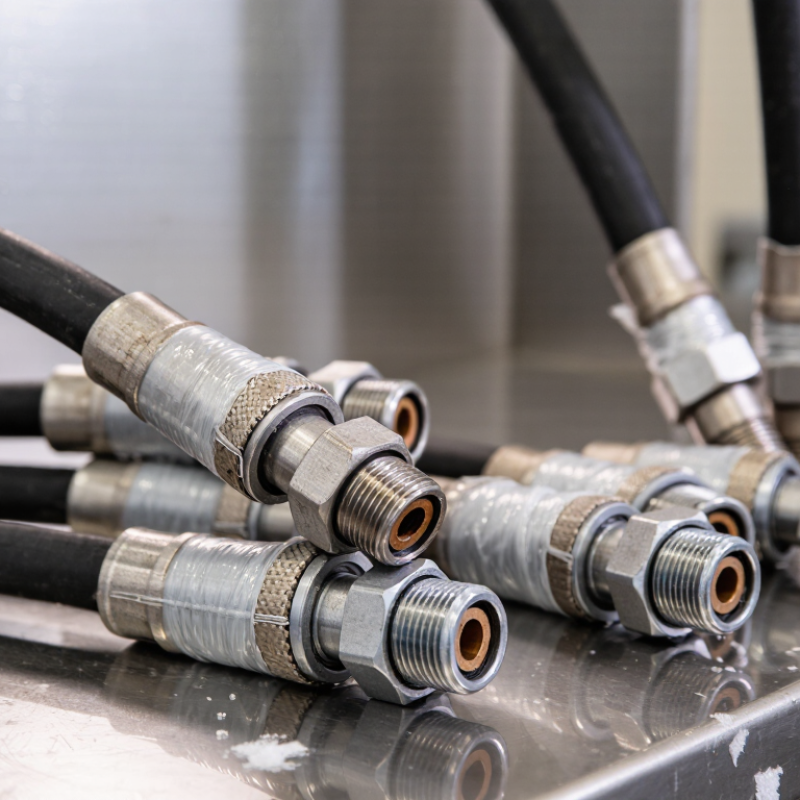
Corrosion in AC refrigerant hoses rarely comes from one cause. The ASHRAE Handbook—Refrigeration identifies moisture, oxygen, acids, and contamination as major system threats. Water may enter through uncapped service ports, incomplete evacuation, or damaged outer covers. Inside the circuit, moisture can react with refrigerant oil and create acidic compounds. These acids attack hose reinforcement, fittings, and crimped connections. The damage may remain hidden under the rubber layer.
External conditions matter too. Road salt, coastal humidity, mud, and cleaning chemicals can corrode metal fittings. Heat accelerates rubber aging, while ozone can produce surface cracks near engine compartments.
The NACE IMPACT study estimated global corrosion costs at US$2.5 trillion annually, equal to 3.4% of global GDP. This figure covers every industry, not AC hoses, but it shows the scale of neglected corrosion.
A clean-looking hose can still be chemically weakened.
SAE J2064 evaluates automotive refrigerant hoses for pressure, permeation, and refrigerant compatibility.
Passing these tests does not guarantee resistance to poor installation or salt exposure. Technicians should inspect for swelling, oil stains, powdery deposits, rust around crimps, and stiff bends. Replace damaged clamps and keep hose surfaces dry. Use approved caps during service. Vacuum procedures must be verified, not assumed.
I have seen maintenance plans miss the fittings. That small mistake can become the leak path.
How to Choose Corrosion-Resistant Refrigerant Hoses
Selecting a refrigerant hose requires more than checking pressure ratings. Moisture, oxygen, oil residue, and acidic contaminants can attack the inner tube and fittings. ASHRAE Handbook—Refrigeration 2022 stresses clean, dry systems and material compatibility. Choose hoses with low-permeation inner layers, strong reinforcement, and fittings made from corrosion-resistant alloys. The hose must also match the refrigerant, oil type, temperature range, and working pressure.
Look closely at the technical data sheet. A suitable hose should show burst pressure, minimum bend radius, permeation performance, and refrigerant compatibility. AHRI Standard 700-2019 sets purity limits for refrigerants, including moisture and acidity. Those limits matter during servicing. A contaminated charging line can transfer damaging residues into a clean system. Keep caps installed when hoses are stored. Small details matter.
The International Energy Agency reports that space-cooling energy demand could more than triple by 2050 in its Future of Cooling report. More service work may increase hose wear and contamination risks. In field use, inspect the crimp area, surface cracks, stiffness, and fitting discoloration before every connection. Replace questionable hoses early. A visual check is useful, but not perfect. I have seen clean-looking hoses fail near the fitting after repeated bending. Select conservatively, record service conditions, and review the choice after real operating experience.
| Selection Dimension | Recommended Requirement | Why It Matters for Corrosion Resistance | Inspection or Selection Method |
|---|---|---|---|
| Applicable Refrigerant | Choose a hose specifically rated for the refrigerant in use, such as R134a, R1234yf, R410A, R32, or approved lower-global-warming-potential blends. | Refrigerants, lubricants, and additives can affect the inner tube, barrier layer, sealing elements, and metal fittings differently. | Check the hose specification and safety documentation for the exact refrigerant and compressor oil combination. Do not rely only on outside diameter or appearance. |
| Applicable Standard | For automotive air-conditioning applications, select products tested to the relevant requirements of SAE J2064 or an equivalent applicable specification. | Recognized specifications normally address pressure resistance, refrigerant permeation, temperature capability, and durability. | Request test reports or a certificate of conformity covering the intended hose construction and application. |
| Inner Tube Material | Use a refrigerant-compatible elastomer inner tube, commonly formulated from materials such as chlorobutyl or other qualified low-permeation compounds. | The inner tube is directly exposed to refrigerant and oil. Chemical incompatibility can cause swelling, cracking, hardening, or internal contamination. | Confirm compatibility with the refrigerant, lubricant, operating temperature, and expected service life before purchase. |
| Barrier Layer | Prefer a multilayer hose with a dedicated low-permeation barrier layer rather than a basic single-layer rubber hose. | Lower permeation reduces refrigerant loss and limits the movement of moisture and contaminants through the hose wall. | Compare the documented refrigerant permeation result and test method. A barrier layer should be part of the hose construction, not merely an external coating. |
| Reinforcement | Use reinforcement appropriate for the working pressure and pulsation level, such as high-strength textile braid or wire reinforcement where specified. | Correct reinforcement limits expansion, fatigue, and stress at the hose-to-fitting connection, reducing opportunities for cracking and moisture entry. | Verify working pressure, burst pressure, impulse performance, and minimum bend radius against the system requirements. |
| External Cover | Select a cover resistant to abrasion, ozone, ultraviolet exposure, road salt, water, oil mist, and the surrounding operating temperature. | Damage to the cover can expose reinforcement layers to water and oxygen, accelerating rust or corrosion near fittings and crimp areas. | Inspect the cover for cuts, blisters, exposed braid, hardening, and weather cracking. Use protective sleeving where rubbing or heat exposure is unavoidable. |
| Metal Fittings | Use properly plated or corrosion-resistant fittings compatible with the system and the selected hose assembly. | Fittings are often the first area affected by salt, condensation, dissimilar-metal contact, and damaged plating. | Look for uniform surface protection, clean sealing surfaces, correct thread form, and no visible pitting. Avoid mixing incompatible metals in a wet or salty environment without suitable isolation. |
| Operating Temperature | Choose a hose whose specified temperature range covers both the lowest ambient condition and the highest temperature near the compressor or engine compartment. | Excessive heat accelerates elastomer aging, while low temperatures can reduce flexibility and increase cracking during movement. | Compare the hose temperature rating with measured or documented system conditions, including short-term temperature peaks. |
| Pressure Rating | The working-pressure rating must exceed the maximum pressure expected in the high-side and low-side circuits, including transient conditions. | Pressure overload can create microcracks, fitting deformation, or leakage paths that allow moisture and corrosive contaminants to enter. | Use the lower rating of the hose, fitting, and assembly when evaluating the complete hose assembly. Never select by hose tube pressure alone. |
| Moisture Control | Keep hose ends capped and sealed during storage and installation. Use a correctly maintained receiver-drier or accumulator where the system design requires one. | Moisture can react with refrigerant-related chemicals, contribute to internal corrosion, and damage other air-conditioning components. | Replace moisture-control components according to the system service procedure, especially after a major leak, prolonged opening, or compressor failure. |
| Routing and Bend Radius | Route the hose without sharp bends, twisting, kinks, compression, or continuous contact with hot or abrasive parts. | Mechanical stress damages the barrier and reinforcement, while abrasion can expose the hose structure to water, salt, and oxygen. | Follow the manufacturer’s minimum bend radius and use suitable clamps or supports. Allow enough clearance for engine and equipment movement. |
| Connection and Crimp Quality | Use fittings and crimp sleeves matched to the exact hose construction. Assembly should be performed with calibrated tooling and the specified crimp dimensions. | An incorrect crimp can leak, permit moisture ingress, or create localized stress that promotes fitting corrosion and hose failure. | Check crimp dimensions, pull-off resistance, leak-test results, and fitting alignment. Do not reuse a crimped fitting unless the procedure explicitly permits it. |
| Leak and Pressure Testing | After installation, perform an approved leak test and pressure test using procedures suitable for the refrigerant system. | Early detection prevents prolonged exposure of fittings and nearby components to refrigerant, oil, moisture, and environmental contaminants. | Inspect all joints, service ports, and hose surfaces. Use an appropriate electronic detector or approved leak-detection method rather than relying only on visual inspection. |
| Storage Conditions | Store hoses capped, dry, clean, and protected from direct sunlight, ozone sources, chemicals, and excessive heat. Avoid prolonged sharp bending. | Improper storage can age the elastomer and allow moisture or dust to contaminate the inner passage before installation. | Apply first-in, first-out stock rotation and inspect stored hoses for discoloration, cracks, deformation, damaged caps, or exceeded shelf-life limits. |
| Maintenance Frequency | Inspect hoses during routine air-conditioning service and whenever the system shows low cooling performance, oil residue, or abnormal pressure. | Oil staining, surface cracking, swelling, corrosion, and loose supports can indicate a developing leak or structural deterioration. | Replace the hose assembly if leakage, exposed reinforcement, severe corrosion, deep abrasion, blistering, or significant hardening is found. |
Correct installation is the first defense against corrosion in AC refrigerant hoses. The International Energy Agency reports that cooling consumed nearly 2,000 TWh worldwide in 2018, or almost 10% of global electricity use. Reliable hose work therefore protects equipment and reduces avoidable energy loss.
Before installation, inspect the hose for crushed sections, surface cracks, and damaged fittings. Keep both ends capped until connection. Route the hose away from exhaust heat, sharp brackets, and standing water. Respect the manufacturer’s minimum bend radius. A tight loop can weaken the inner tube and trap oil. Secure it with cushioned clamps, not bare metal ties. Leave enough movement for engine vibration.
Use clean tools and compatible seals. Tighten fittings to the specified torque, because excessive force can distort the sealing surface. After assembly, pressure-test with dry nitrogen at the approved test pressure. Never use oxygen or compressed air. Pull the system into a deep vacuum, commonly below 500 microns, then confirm that the reading holds. The 2022 ASHRAE Handbook—Refrigeration stresses evacuation and moisture control as essential service practices. SAE J2064 also defines performance requirements for automotive refrigerant hose assemblies.
In field work, the missed detail is often simple: a hose touches a hot pipe. I have seen that mistake shorten service life. A second inspection feels slow, but it is cheaper than recovering refrigerant and replacing corroded fittings. Five extra minutes can reveal a hidden rub point.
China’s AC refrigerant hoses face corrosion from both inside and outside. The 2016 NACE IMPACT study estimated global corrosion costs at 3.4% of worldwide GDP. That figure includes industrial equipment, but it highlights the price of neglect.
External corrosion often starts beneath clamps, dust, or wet insulation. Road salt and condensate make the problem worse. Wipe hoses regularly, keep them away from sharp brackets, and leave space for drainage. Use protective sleeves where heat, ultraviolet exposure, or metal edges may damage the cover. A dry surface is not always a safe surface.
Internal corrosion is less visible. Moisture, oxygen, acidic residues, and unsuitable oil can attack the inner tube. The ASHRAE Handbook identifies moisture and contaminants as major risks in refrigeration systems. Keep hose ends capped during storage. Evacuate the circuit properly; a vacuum near 500 microns is common practice, but the equipment specification should control. Inspect for dark particles, unusual odor, pressure loss, or oil staining. SAE J2064 provides performance requirements for automotive refrigerant hose assemblies, including resistance to permeation and pressure. Still, compliance does not remove installation errors. I would not trust a clean outer jacket alone. Some failures begin quietly inside.
Corroded refrigerant hoses can leak slowly, especially near metal fittings and crimped joints. Before inspection, switch off the system and allow components to cool. Refrigerant must be recovered with approved equipment, never released into the atmosphere. Wear gloves and eye protection. A quick visual check is not enough.
Look for rust, swollen rubber, surface cracks, oil stains, and green or white deposits around fittings. Gently bend the hose without forcing it. Brittle areas may crack during handling.
Check routing points for rubbing, sharp bends, and contact with hot components. A pressure gauge can reveal abnormal loss, but it cannot locate every small leak. Electronic detection and approved leak solution provide better evidence.
I have seen hoses appear clean while corrosion was hidden beneath protective sleeves.
Replace the complete hose assembly when the tube, fitting, or crimp shows damage. Select a replacement rated for the refrigerant, operating pressure, temperature, and system oil. Do not reuse damaged sealing washers or force misaligned fittings. Route the new hose with enough slack, then secure it away from vibration and heat. Tighten connections to the specified torque. After installation, pressure-test the system with dry nitrogen, repair any leaks, evacuate it properly, and recharge the measured refrigerant amount. Recheck the joints after operation. Small details matter.
Inspect for crushed sections, surface cracks, and damaged fittings. Keep both ends capped until connection. Do not rush.
Keep it away from exhaust heat, sharp brackets, and standing water. Avoid tight bends and rubbing points. Leave room for engine movement.
A tight loop can weaken the inner tube and trap oil. Follow the specified bend radius carefully. Small details matter.
Use cushioned clamps instead of bare metal ties. Secure the hose without crushing it. Allow enough slack for vibration.
Use clean tools and seals compatible with the refrigerant and system oil. Do not reuse damaged sealing washers. Misaligned fittings need correction, not force.
Pressure-test it with dry nitrogen at the approved test pressure. Never use oxygen or compressed air. Then evacuate the system below the specified vacuum level and confirm the reading holds.
Look for rust, swollen rubber, surface cracks, oil stains, and green or white deposits. Check especially near fittings and crimped joints. Corrosion may hide under protective sleeves.
Replace it when the tube, fitting, or crimp shows damage. Choose a hose rated for the refrigerant, pressure, temperature, and system oil. Repairing one visible spot may not solve the deeper problem.
No. A gauge can show abnormal pressure loss, but small leaks may remain hidden. Use approved electronic detection or leak solution for stronger evidence.
Tighten the fittings to the specified torque. Pressure-test, repair leaks, evacuate properly, and recharge the measured refrigerant amount. Recheck the joints after the system operates. Five extra minutes can reveal a hidden rub point.
Corrosion in AC refrigerant hoses can result from moisture, air, chemical exposure, road salt, high temperatures, and poor-quality materials. To reduce these risks, choose hoses made with corrosion-resistant inner tubes, durable outer covers, and fittings that can withstand refrigerant, oil, pressure, and environmental conditions. Proper installation is equally important: keep hoses away from sharp edges, heat sources, moving parts, and areas where water or chemicals may collect. Avoid excessive bending, twisting, or over-tightening, as these can damage protective layers and create weak points.
How to avoid corrosion in AC refrigerant hoses? Keep the system properly sealed, prevent moisture and contaminants from entering, clean the hose exterior regularly, and protect exposed sections from abrasion and chemicals. During routine inspections, look for rust, swelling, cracks, leaks, discoloration, or damaged fittings. Any hose showing serious corrosion or structural deterioration should be replaced promptly with a compatible, properly rated part to maintain system safety, efficiency, and reliable cooling performance.
Autowellix Autoparts