Choosing a reinforced silicone hose is not a styling decision. It is a fit, temperature, pressure, and durability decision. Colin Chapman, the racing-car designer, is often credited with the line, “Adding power makes you faster on the straights. Subtracting weight makes you faster everywhere.” That principle reminds buyers to consider the complete system, not just a shiny hose.
How to choose reinforced silicone hoses for performance cars? Start by measuring the existing hose’s inside diameter, length, bend radius, and connection points. Check the engine bay after it reaches operating temperature. A hose that clears a cold engine may rub against a bracket once everything moves and expands. Match the hose’s temperature and pressure ratings to the actual application, and confirm compatibility with coolant, oil mist, or other fluids it may encounter. Reinforcement layers matter, too: they help resist pressure and deformation, but cannot correct poor fitment.
Look closely at the details. Smooth inner walls, even reinforcement, cleanly formed bends, and secure clamps are useful signs. Ask the supplier for test data and clear specifications; a product photo proves very little. Chapman’s famous quote concerns vehicle design, not silicone-hose engineering, so it should not replace technical evidence. That distinction matters.
There is no universal best hose. This guide will compare material quality, construction, routing, and installation checks to help performance-car owners make a better-informed choice. One limitation is easy to miss: without measuring your specific engine bay, even good advice stays general. Measure twice. Check again after installation.
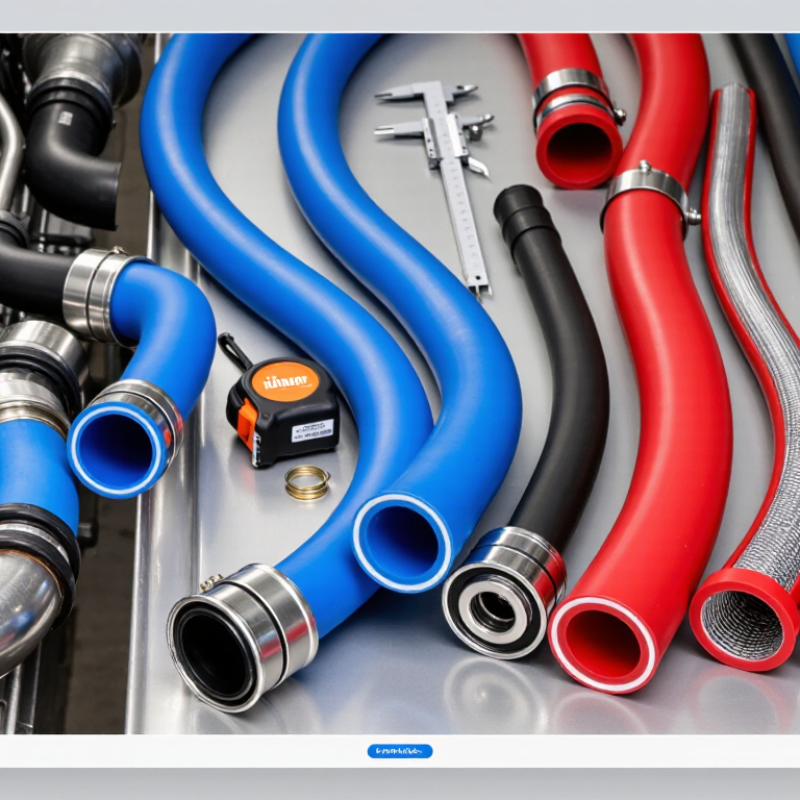
Choosing reinforced silicone hoses for a performance car starts with accurate temperature planning. I begin by mapping heat sources around the engine bay. Record ambient temperature, coolant temperature, intake temperature, and exhaust-side radiant heat.
Typical silicone ratings span −50°C to 200°C. However, that range describes material capability, not ideal continuous operation.
Turbocharged engines can create sharp temperature spikes after hard acceleration.
Peak temperature matters.
During road testing, place temperature sensors near bends, clamps, and nearby exhaust components. Readings near the engine often differ from readings inside the hose. A hose may tolerate 200°C briefly but soften during prolonged heat soak.
I once selected a hose using only the coolant gauge. That decision looked reasonable. Real-world heat soak proved otherwise. Now I allow extra thermal margin and inspect the hose after repeated hot runs.
Reinforcement also affects performance under pressure and vibration. Choose construction suitable for the intended coolant, air, or charge-air system. Check whether the hose remains flexible at low temperatures.
A stiff hose can crack around a tight bend during winter starts.
Inspect for swelling, surface blisters, discoloration, and clamp movement. These details provide practical evidence beyond a specification sheet.
Temperature judgment is not perfect, especially when sensors miss radiant heat. Recheck measurements after installation, because nearby hardware can change the local environment.
Choosing reinforced silicone hoses for a performance car requires more than checking color, thickness, or flexibility. Coolant temperature can rise sharply near turbochargers and tightly packed engine bays. SAE J20 requirements provide a useful reference for pressure resistance, heat tolerance, coolant compatibility, and dimensional stability. A hose should match its actual application, not simply appear strong.
Radiator hoses face repeated heat cycles and pressure changes. Heater hoses may need different flexibility and diameter control. Some applications also experience vacuum conditions during engine cooldown. Reinforcement helps prevent expansion and collapse, but it does not guarantee SAE J20 compliance. Check the supplier’s technical data for the relevant SAE J20 classification, operating temperature, pressure rating, and test evidence. Confirm the inner diameter carefully. A loose fit can leak after several track sessions.
Tips: Measure the original hose at several points. Inspect nearby clamps, fittings, and sharp edges. Leave enough clearance from exhaust parts. Do not rely on appearance alone. A bright silicone surface can hide poor construction. It is also easy to choose a thicker hose that bends badly. That mistake can restrict coolant flow or load the connection. For demanding use, inspect the hose after the first few drives, then review it during regular maintenance. No selection is perfect. Vehicle layout, coolant chemistry, and driving style still require judgment.
Use this guide to identify the hose application, check the vehicle’s operating requirements, and confirm that the hose is documented as suitable for the relevant SAE J20 specification.
| Coolant-Hose Application | Typical Service Conditions | Construction to Consider | SAE J20 Check | Fitment and Inspection |
|---|---|---|---|---|
| Radiator inlet or outlet | Connects the engine cooling circuit to the radiator; exposed to hot coolant, pressure variation, vibration, and engine-bay heat. | Choose a coolant-compatible hose with reinforcement and a shape suited to the routing. Use a molded hose or formed assembly where a straight hose would kink or flatten. | Confirm that the manufacturer identifies the hose for the applicable SAE J20 radiator-hose requirement and provides ratings suitable for the vehicle. | Match the original inside diameter, bend geometry, and connection length. Check clearance from belts, pulleys, fans, and sharp edges. |
| Heater supply or return | Carries coolant between the engine and heater core. The route may include tight bends and may pass through confined areas. | Select a flexible coolant hose that maintains its shape at the required bend radius. Reinforcement should suit the system’s pressure and routing needs. | Verify the applicable SAE J20 heater-hose requirement in the product documentation; do not assume every coolant hose is suitable for heater service. | Check connection diameter, bend radius, and routing. Avoid twisting the hose or forcing a bend tighter than the hose permits. |
| Coolant bypass line | Routes coolant within the engine circuit. Some sections are short and have little space around nearby components. | Use a hose specified for engine coolant and the required temperature and pressure. A formed hose may be needed where the route has compound bends. | Check the documented SAE J20 application and operating limits for the exact hose construction and size. | Confirm that the hose does not collapse, kink, or contact hot exhaust components during engine movement. |
| Expansion or overflow connection | Connects a coolant reservoir or recovery tank to the cooling circuit. The pressure conditions depend on the vehicle’s system layout. | Choose hose material and construction approved for the actual coolant, temperature, and pressure exposure. A low-pressure-looking connection should not be assumed to be unpressurized. | Check the vehicle service information and the hose documentation to establish whether the selected SAE J20 requirement applies to this connection. | Match the connection size and routing. Ensure the hose is secured and cannot rub through or become pinched. |
| High-temperature engine-bay routing | Any coolant hose routed near a turbocharger, exhaust manifold, or other high-heat component can experience additional radiant heat. | Select a hose with a documented temperature range suitable for the service. Add heat shielding or revise routing when required by the vehicle or hose manufacturer. | SAE J20 identification alone does not establish suitability for every nearby heat source; verify the hose’s stated temperature limits and application. | Maintain clearance from hot surfaces and moving parts. Inspect shielding, clamps, and hose condition during scheduled maintenance. |
| Replacement of an original-equipment coolant hose | Must operate within the vehicle’s specified coolant temperature, system pressure, and installation conditions. | Use a hose whose material, reinforcement, shape, and dimensions are appropriate for the original application. Silicone construction by itself does not establish compatibility. | Request clear documentation of the applicable SAE J20 specification or requirement, along with the hose’s operating limits. Confirm the specification revision where relevant. | Follow vehicle service procedures for coolant draining, filling, bleeding, clamp placement, and leak checks. |
Selection note: SAE J20 covers automotive coolant hose requirements, but a silicone hose should not be treated as SAE J20-compliant unless its documentation explicitly supports the relevant requirement. Select by the vehicle’s specified hose dimensions, coolant compatibility, operating temperature, and pressure—not by material or appearance alone. SAE J20 categories and requirements can vary by hose type and standard revision, so verify the current applicable specification and product data before installation.
How to Choose Reinforced Silicone Hoses for Performance Cars?
Specify Hose Diameter Against OEM Port Sizes and Coolant-Flow Needs
A reinforced silicone hose should match the OEM port diameter, not merely the old hose’s outside size. Measure each port with calipers, including thermostat housings, radiators, and expansion tanks. A 10% smaller internal diameter reduces flow area by about 19%. That restriction can raise coolant velocity and pressure loss. The relationship follows the area equation, A = πD²/4, used in fluid-flow engineering. SAE J20 provides widely used requirements for automotive coolant-hose performance, including pressure, temperature, and aging resistance.
Performance engines often produce more heat than standard engines. However, a larger hose is not automatically better. It may seal poorly at the port, collapse near a tight bend, or reduce control through a smaller outlet. I have seen hoses selected by appearance alone. They looked substantial. The fit was wrong. Measure twice.
Tips
Record every port size before ordering. Choose a hose with an internal diameter within the port manufacturer’s recommended tolerance. Check the bend radius under real installation conditions, with the engine supported normally. Reinforcement helps resist pressure and collapse, but it cannot correct poor sizing. Review coolant-flow targets from the vehicle service manual or cooling-system test data. If those figures are unavailable, use pressure-temperature observations carefully; this approach is useful, but imperfect. Secure the hose with correctly sized clamps, leaving no sharp edge against the silicone wall.
When choosing reinforced silicone hoses for performance cars, compare published pressure ratings before counting reinforcement plies. Ply count shows construction strength, but it does not guarantee safe operating pressure. A three-ply hose may outperform a four-ply design if its fabric, bonding, and silicone quality are better. Check the manufacturer’s working pressure, burst pressure, temperature range, and test conditions. Never treat burst pressure as a normal operating limit.
Match the rating to real engine conditions. Turbocharged systems can experience sharp pressure pulses, heat soak, and vibration near the compressor outlet. Measure the hose temperature after a hard drive, not only in the workshop. Leave room for pressure spikes and aging. A hose routed beside a hot exhaust component may lose strength earlier. Correct diameter matters too. A loose fit can create leaks, even when the pressure rating looks impressive. I have seen carefully selected hoses fail because the clamp sat behind the bead.
Tips: Compare working pressure at your expected temperature. Ask whether the rating applies to straight hoses or formed bends. Inspect the reinforcement through the cut edge, but do not rely on appearance alone. Use quality clamps and support long connections. Recheck the joint after several heat cycles. Ply count remains useful, but it is only one part of the decision. Sometimes, the published data is incomplete, and that should make you pause.
Compare reinforcement ply counts with representative published maximum working-pressure ratings at approximately 23°C.
More reinforcement plies generally increase pressure resistance, but the actual rating also depends on hose diameter, temperature, fittings, bend radius, and service conditions. The pressure bands shown are representative published catalog ranges for reinforced silicone hose constructions and should be verified against the selected hose specification.
Choosing reinforced silicone hoses for performance cars requires more than checking diameter and pressure rating. Fuel compatibility comes first. SAE J30 classifies automotive fuel hoses by construction, service conditions, and test performance, including burst strength, cold flexibility, aging, and fuel resistance. A silicone outer layer may look durable, yet standard silicone can absorb or degrade when exposed to petroleum fuels, additives, or ethanol blends. Fitment is not enough.
The U.S. Department of Energy’s Alternative Fuels Data Center identifies E10 as widely available gasoline, while E15 has specific vehicle-use limitations. That matters because ethanol can increase swelling, permeation, and material stress in unsuitable hoses. Choose a hose with documented SAE J30 compliance for the intended fuel, not merely a generic “high-performance” description. Check the manufacturer’s compatibility table for gasoline, ethanol concentration, diesel, oil, and coolant. Small details matter.
Reinforcement should also match the system’s pressure, vibration, and temperature. A braided structure can improve burst resistance, but it cannot correct chemical incompatibility. I have seen hoses selected for appearance and flexibility, then fail near clamps after repeated heat cycles. That judgment was incomplete. Inspect the inner liner, minimum bend radius, clamp area, and permeation rating. If the documentation does not identify fuel testing or SAE J30 suitability, treat the hose as unverified rather than assuming reinforced silicone is safe.
Match the hose’s inner diameter to the manufacturer’s port size. Measure thermostat housings, radiators, and expansion tanks with calipers. Measure twice.
A 10% smaller inner diameter cuts flow area by roughly 19%. That can increase coolant velocity and pressure loss.
No. It may fit poorly, seal badly, or kink near a tight bend. Bigger is not automatically better.
Check the port size, bend radius, clamp fit, and engine position. A hose that fits while the engine is raised may rub when installed normally.
No. Reinforcement can help resist pressure and collapse, but it cannot fix the wrong diameter or a poor bend.
Consult the vehicle service manual or cooling-system test data. Pressure and temperature observations can help, but they are rough clues.
No. Check documented material compatibility and applicable hose specifications. Appearance and flexibility are not proof. Looks can mislead.
Confirm its stated compatibility with the intended fuel and blend. Check the inner liner, pressure rating, bend radius, and clamp area.
Treat its suitability as unverified. I would not assume compatibility from a generic performance description; that assumption is easy to regret.
How to choose reinforced silicone hoses for performance cars? Begin by defining the hose’s operating environment, including normal and peak temperatures. Many silicone hoses are rated across a broad range, commonly from about −50°C to 200°C, but the selected product must suit the vehicle’s actual cooling conditions. For coolant applications, confirm that the hose design meets the relevant SAE J20 requirements, then select an internal diameter that matches the original equipment port size and supports the required coolant flow without creating unnecessary restriction.
Reinforcement is equally important. Compare the number of reinforcement plies with the manufacturer’s published pressure and temperature ratings, especially when the cooling system operates under high load. Finally, check fluid compatibility rather than assuming all silicone materials are suitable for every application. Fuel-related service should follow SAE J30 requirements and use hose materials specifically designed for fuel exposure. Careful attention to temperature, standards, sizing, reinforcement, and fluid compatibility helps ensure dependable performance and a properly matched installation.

Autowellix Autoparts