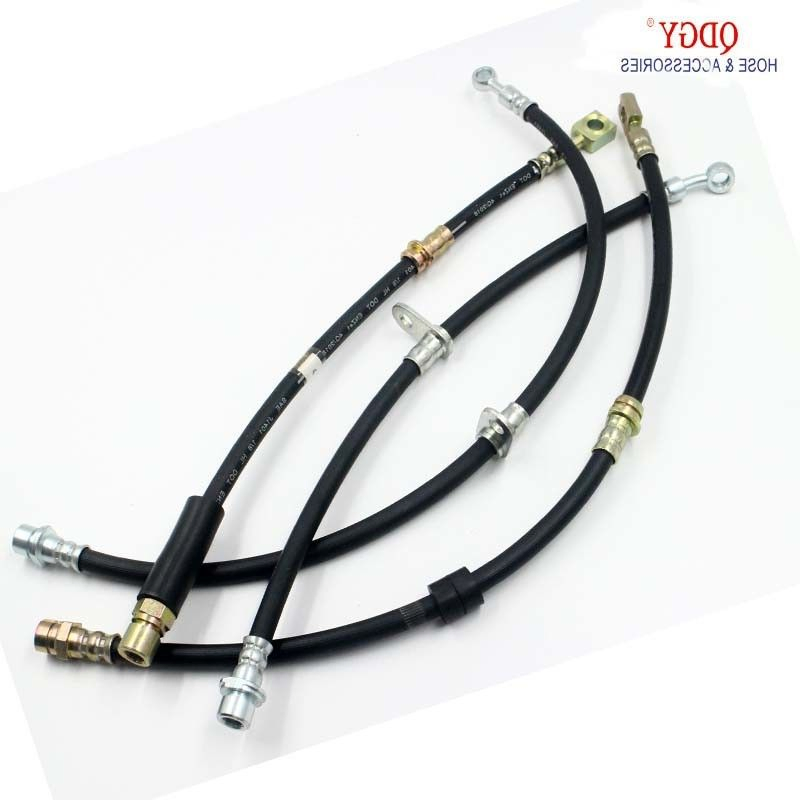
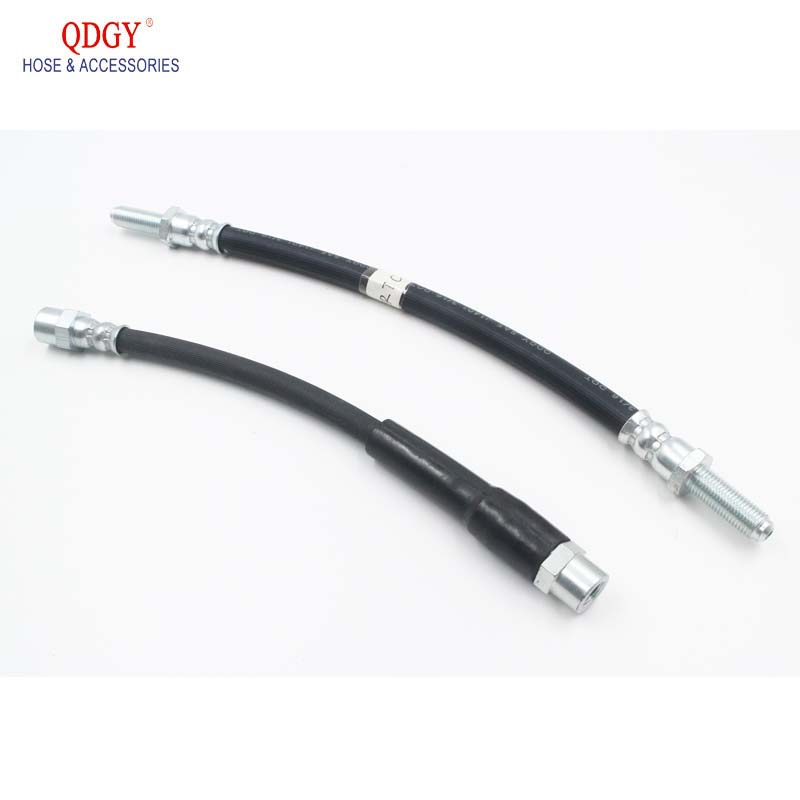
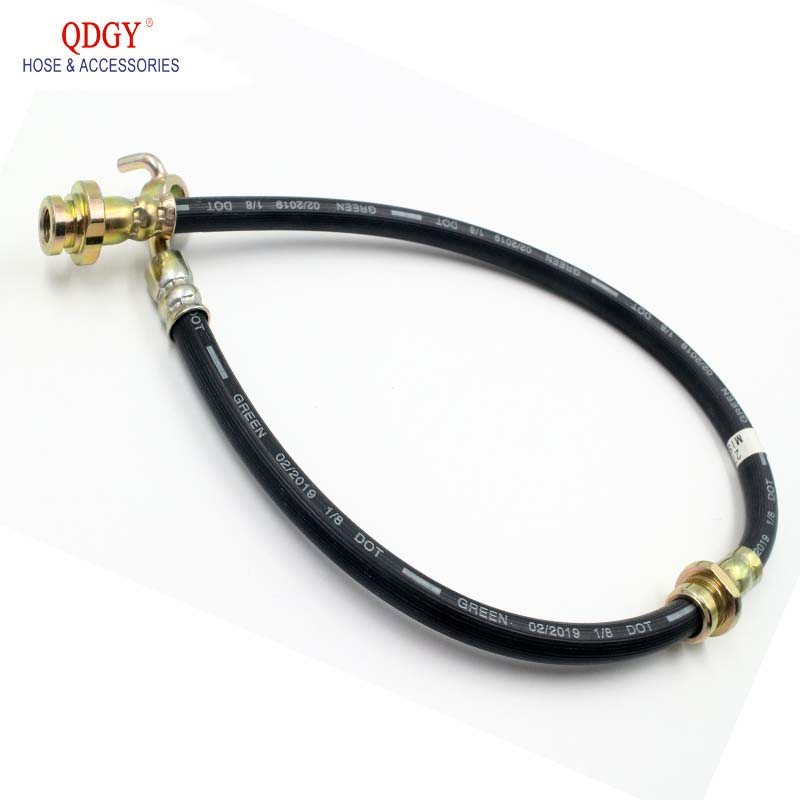
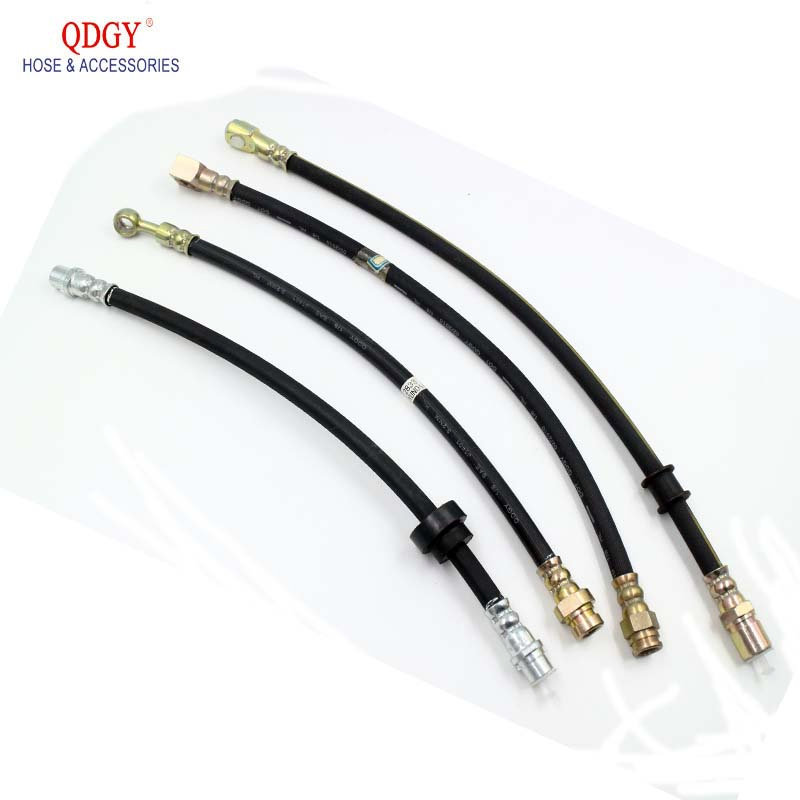
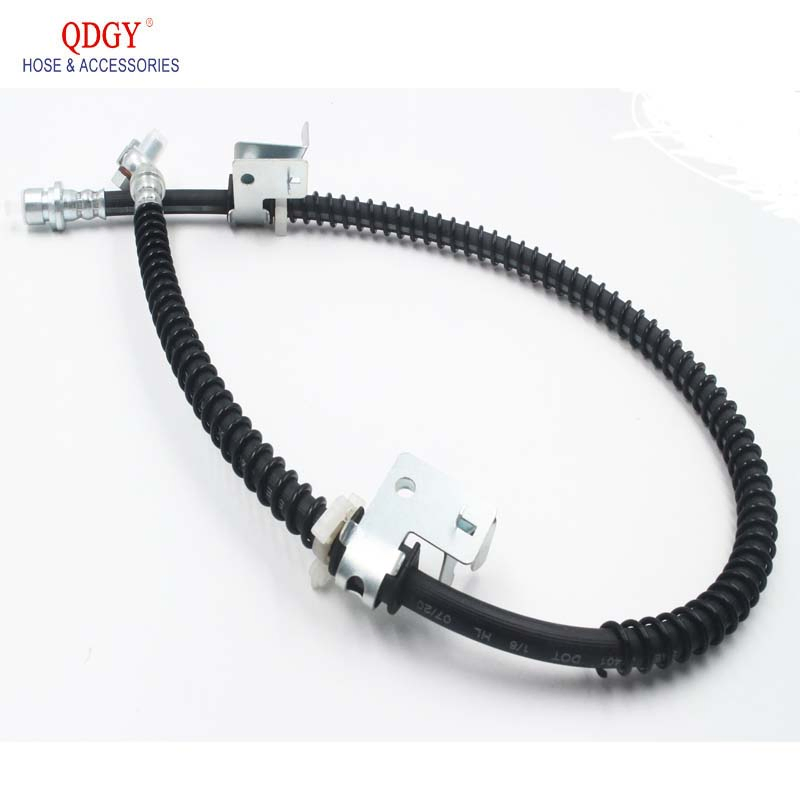
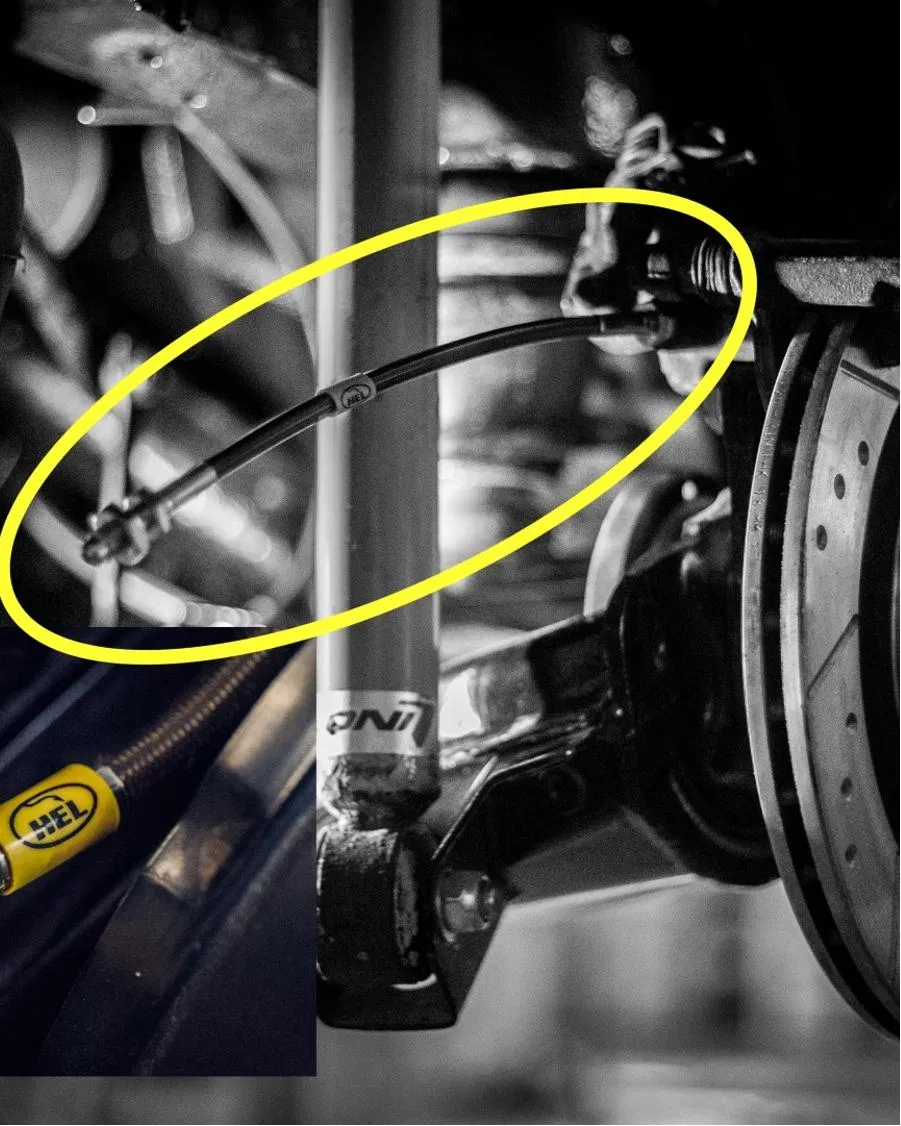
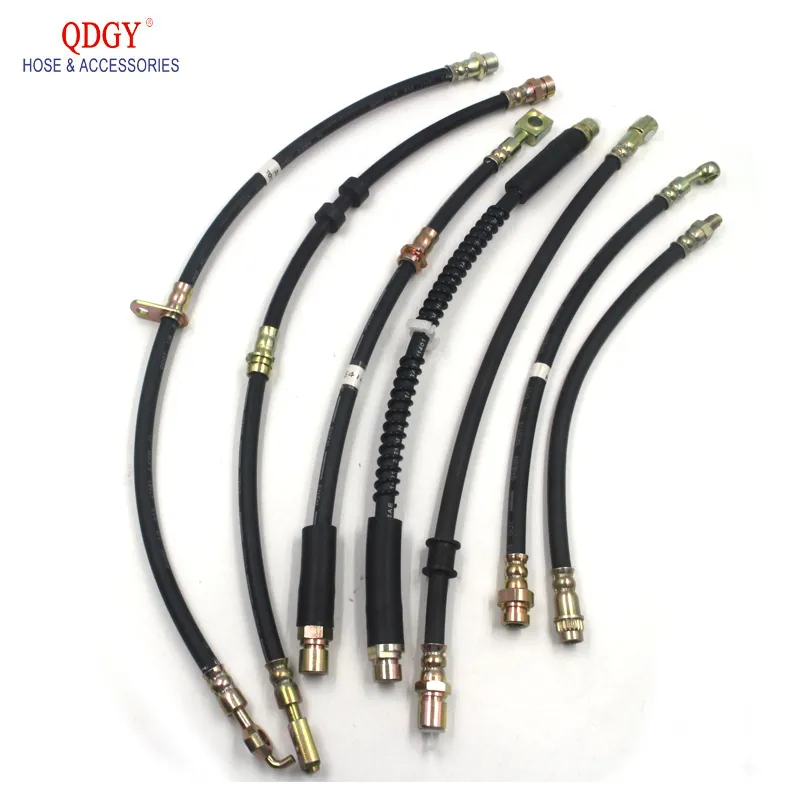
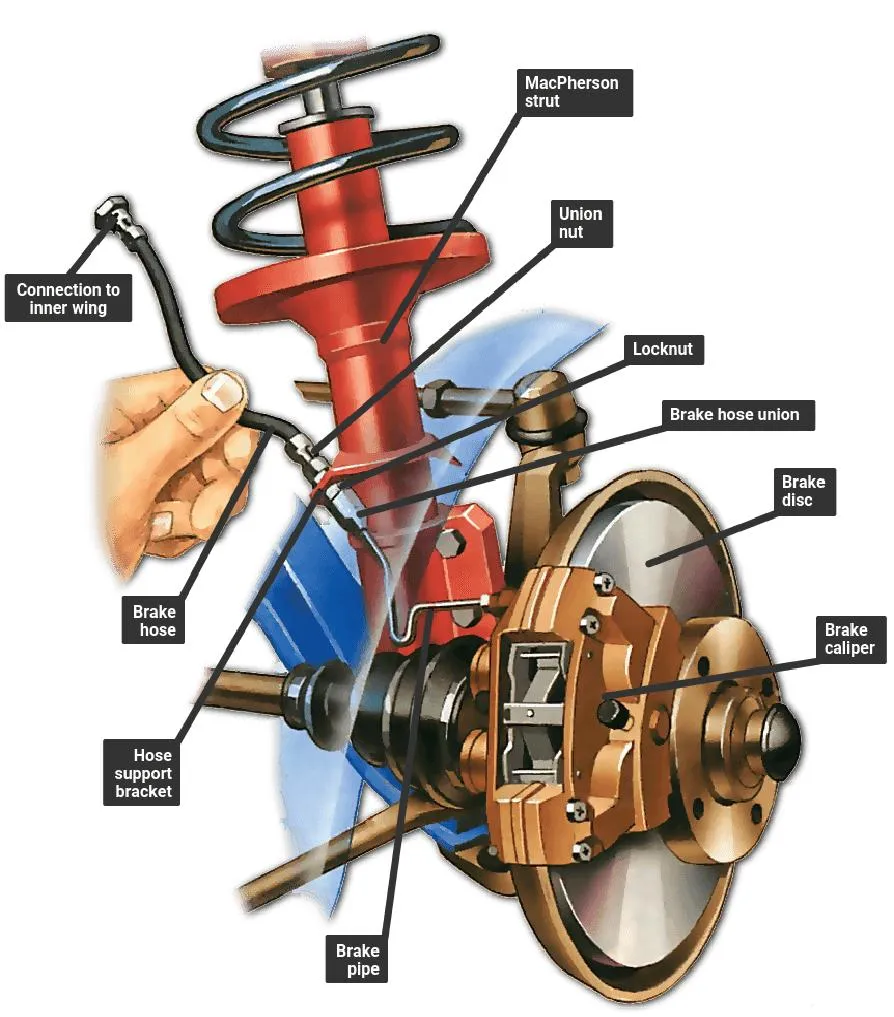
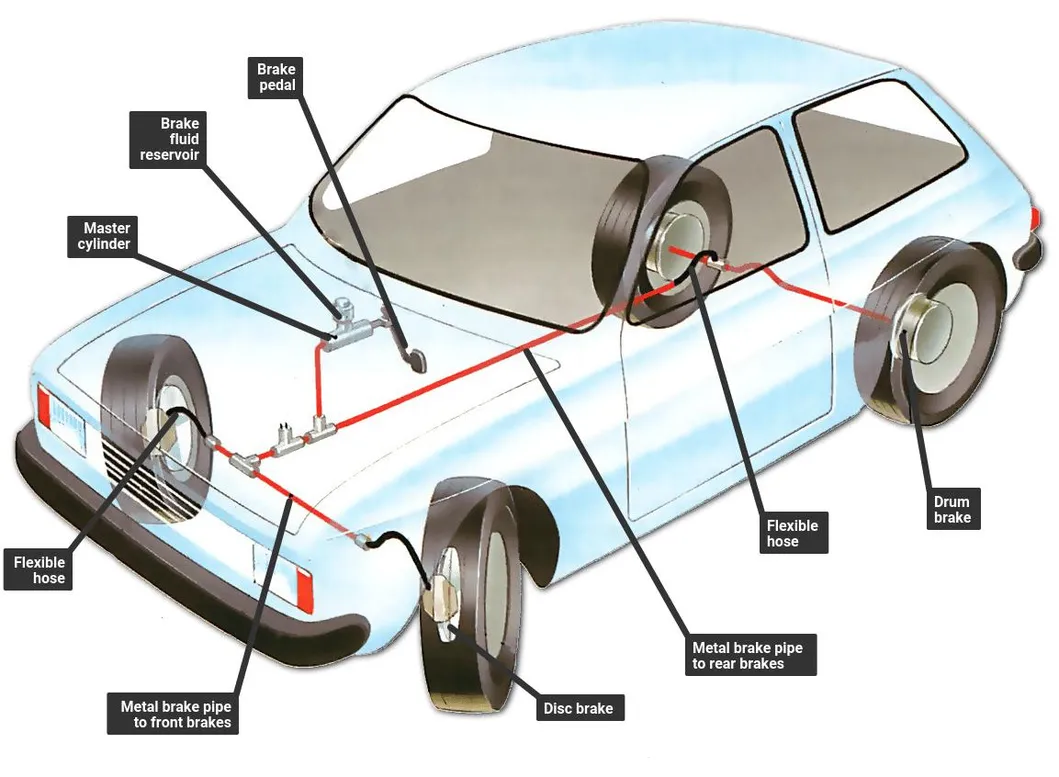
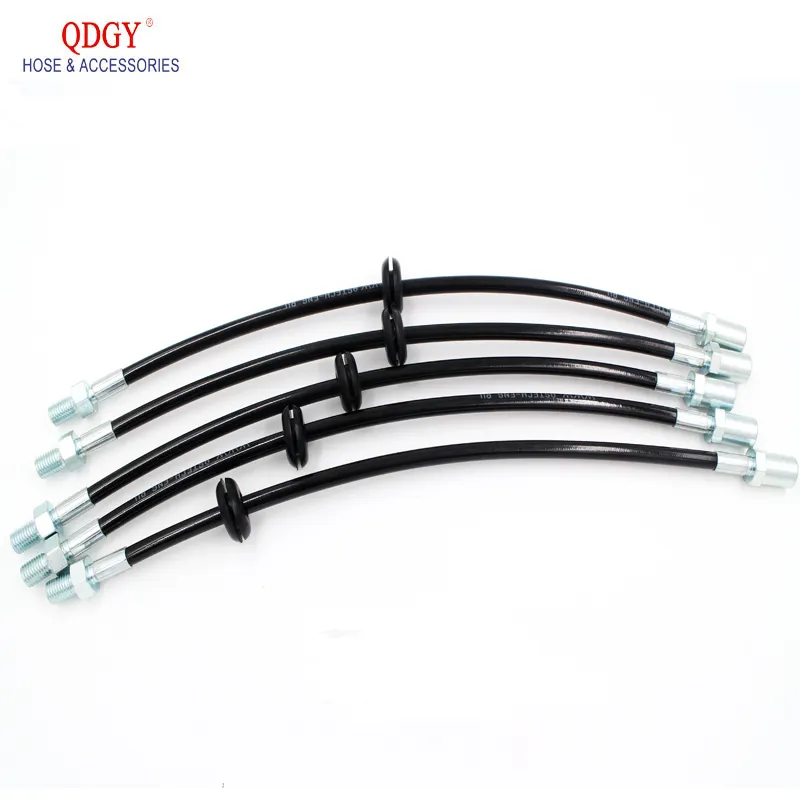
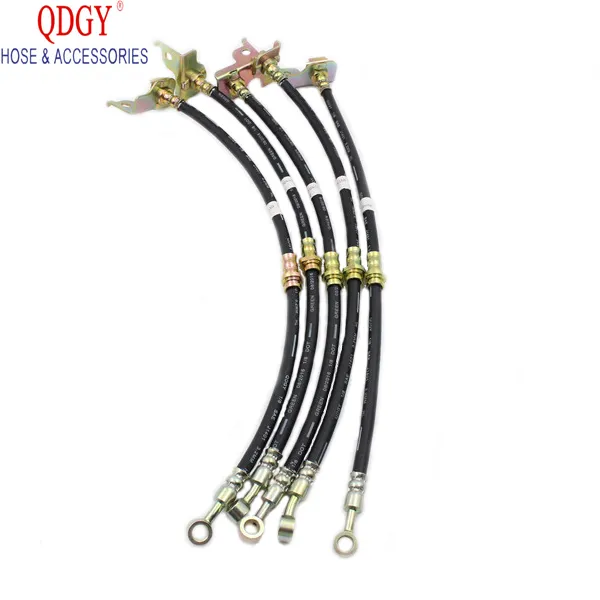
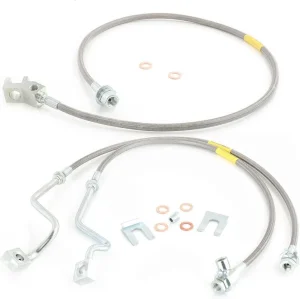
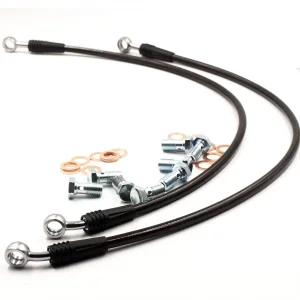
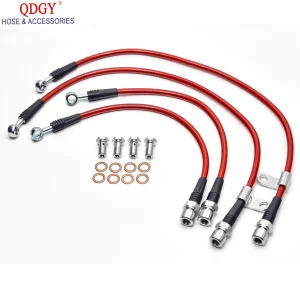
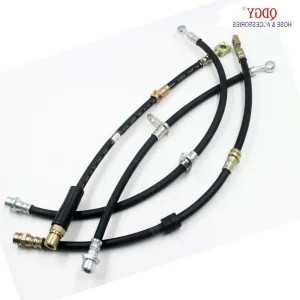
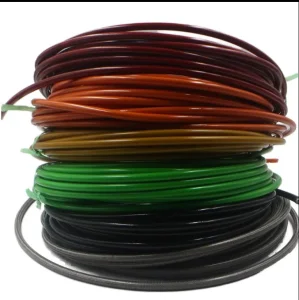
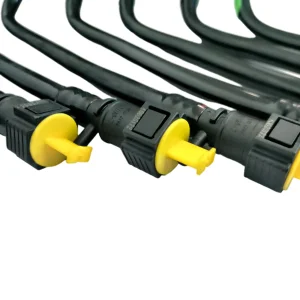
Automobile brake hoses (commonly known as brake pipes) are critical components used in automobile brake systems. Their main function is to transfer the brake medium and ensure that braking force is effectively transmitted to the brake lining or calipers at all times.
Types:
• Hydraulic Brake Hose: Mostly disc type, suitable for passenger cars.
• Air Brake Hose: Suitable for trucks, generally using drum brakes.
Material & Standards:
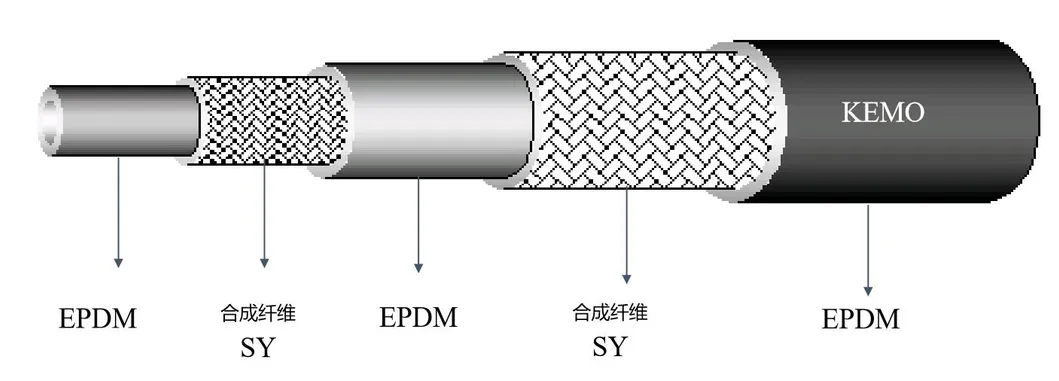
Material: EPDM rubber | End fitting: Steel with White Zinc, Yellow Zinc, Olive green | Standard: SAE J1401
✔ High Pressure Resistance & Lower Volume Expansion
✔ High Tensile Strength
✔ Excellent Resistance to Heat, Cold, and Oil
✔ Aging, Abrasion, and Ozone Resistance
✔ Superior Flexibility & Bursting Resistance
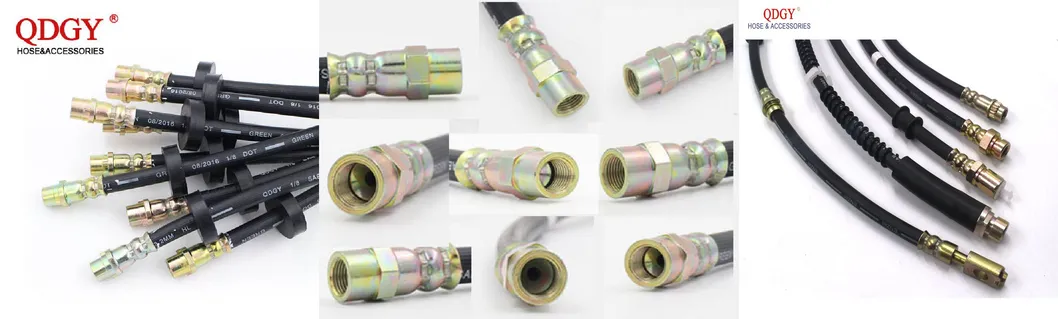
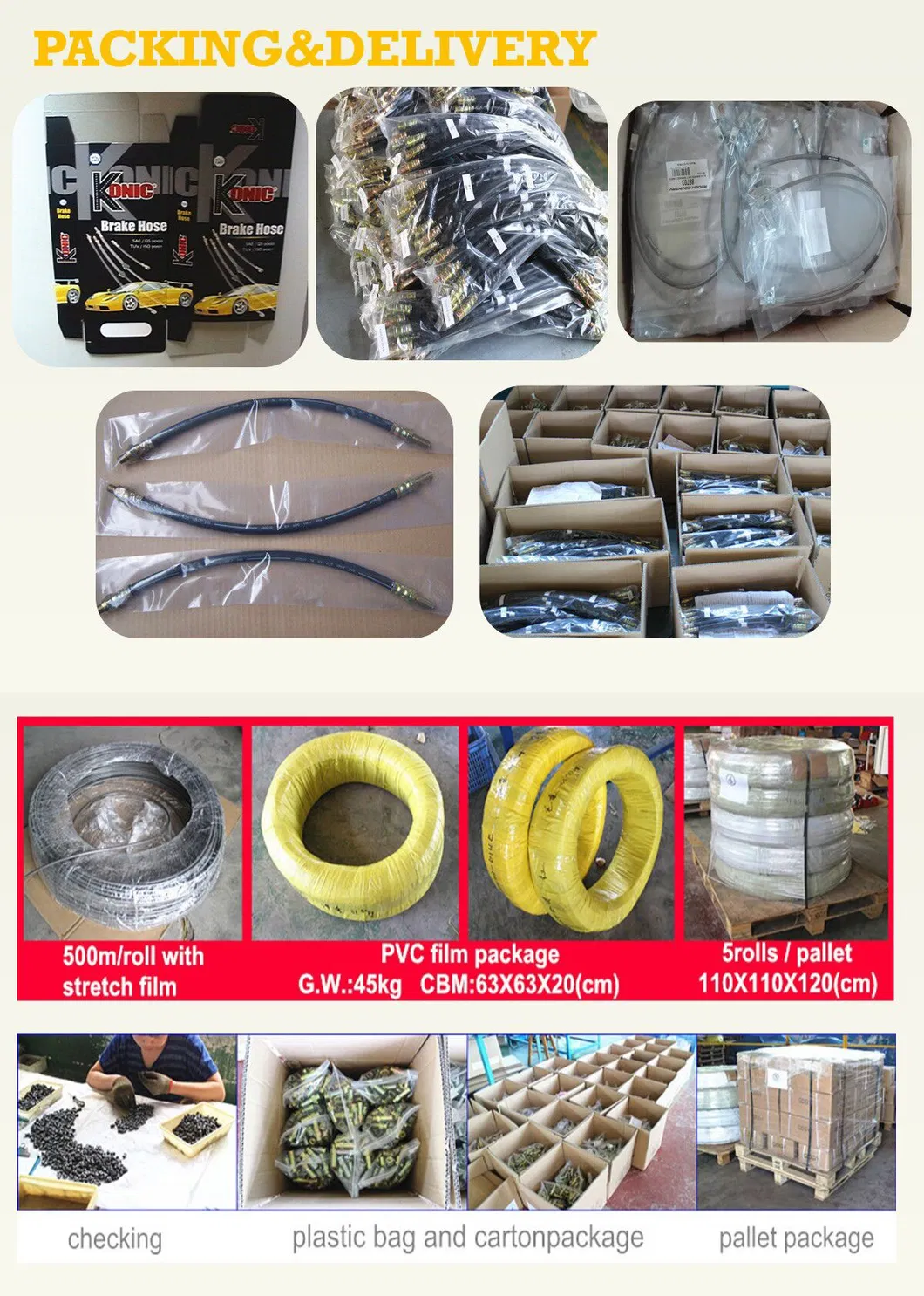
Products including SAE J1401 brake hoses, Teflon brake lines, and steel tube assemblies are exported globally via sea, air, or express courier.
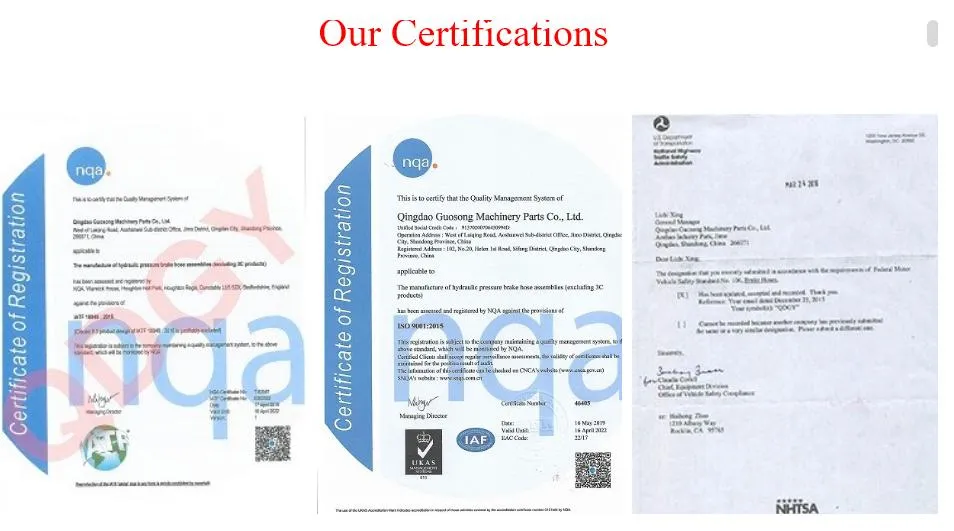
Our products are DOT certified, IATF 16949 certified, and ISO 9001 certified, ensuring safety and reliability for all automotive applications.
Frequently Asked Questions
Q: What standards do these brake hoses follow?
A: The brake hoses comply with international standards including SAE J1401, GB16897-2010, and DOT requirements.
Q: What is the maximum burst pressure for the hydraulic hose?
A: The hoses are designed to withstand a burst pressure of more than 70MPa, providing a high safety margin.
Q: Can these hoses withstand extreme weather conditions?
A: Yes, they are engineered to operate within a temperature range of -40ºC to +150ºC, offering excellent heat and cold resistance.
Q: What vehicles are compatible with these hoses?
A: They are suitable for hydraulic brake systems in a wide range of vehicles, including motorcycles, passenger cars, and heavy-duty trucks.
Q: What materials are used in the construction?
A: The main body is made of high-quality EPDM rubber for flexibility and durability, with end fittings typically made of steel finished with White or Yellow Zinc.
Q: Are the hoses resistant to oils and chemicals?
A: Yes, the materials used provide excellent resistance to brake fluids (DOT3, DOT4), oils, and ozone aging.
 Autowellix Autoparts