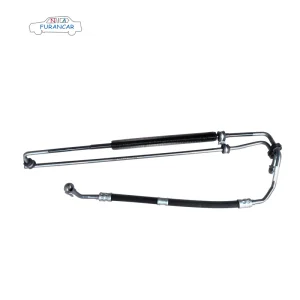
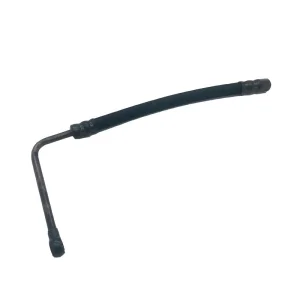
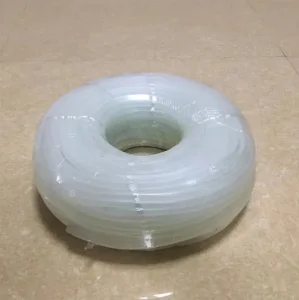
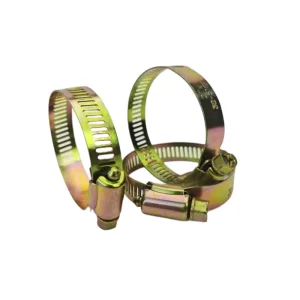
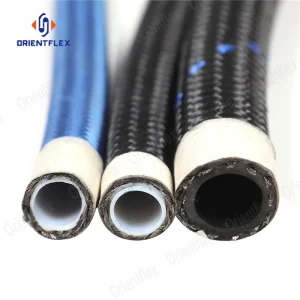
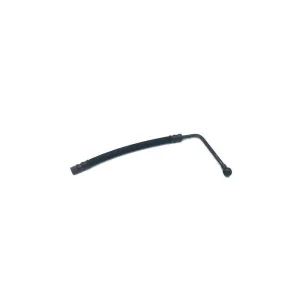
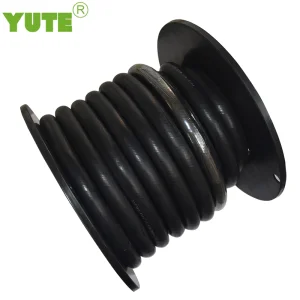
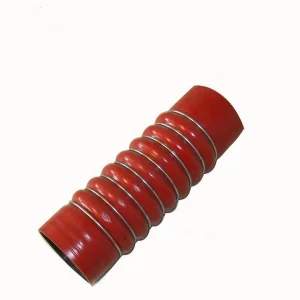
The global automotive landscape operates under stringent safety standards where the margin for error is absolute zero. Within the active chassis systems, the Brake Vacuum Pipe is a deceptively simple yet safety-critical component. Its primary function is to transport the negative pressure (vacuum) generated by the engine's intake manifold—or a dedicated auxiliary electric vacuum pump—directly to the brake booster. This vacuum amplification enables drivers to exert minimal force on the brake pedal while achieving maximum stopping power.
As light vehicle production increases alongside strict emission regulations, the technology surrounding fluid line assemblies has pivoted. Modern vacuum systems are no longer basic rubber tubes. They are engineered composite conduits designed to counter high vacuum collapse, withstand severe engine bay thermal profiles, and resist volatile fuel-vapor permeation. The shift towards lightweight vehicles has forced manufacturers to balance mechanical rigidity with dynamic flexibility.
Designed to operate continuously within environment thresholds of -40°C to +150°C without elastomer degradation or material softening.
Reinforced matrix composition utilizing premium multi-ply high-tensile synthetic braids to counter complete negative pressure drops.
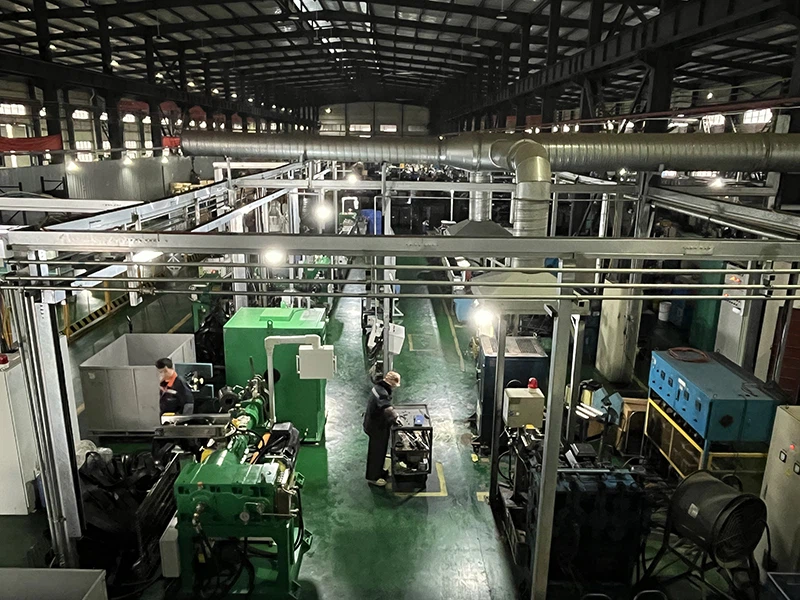
Shenzhen Autowellix Autoparts Co., Ltd. is a professional automotive parts manufacturer and exporter based in Shenzhen, China, specializing in high‑quality vehicle fluid lines and hose assemblies. With a strong focus on innovation, design, and precision manufacturing, Autowellix offers a wide range of products including coolant hoses, gearbox oil lines, steering fluid pipes, windshield spray hoses, and other critical automotive pipe solutions. The company combines advanced R&D capabilities with experienced production teams to ensure products meet demanding industry standards and vehicle performance requirements.
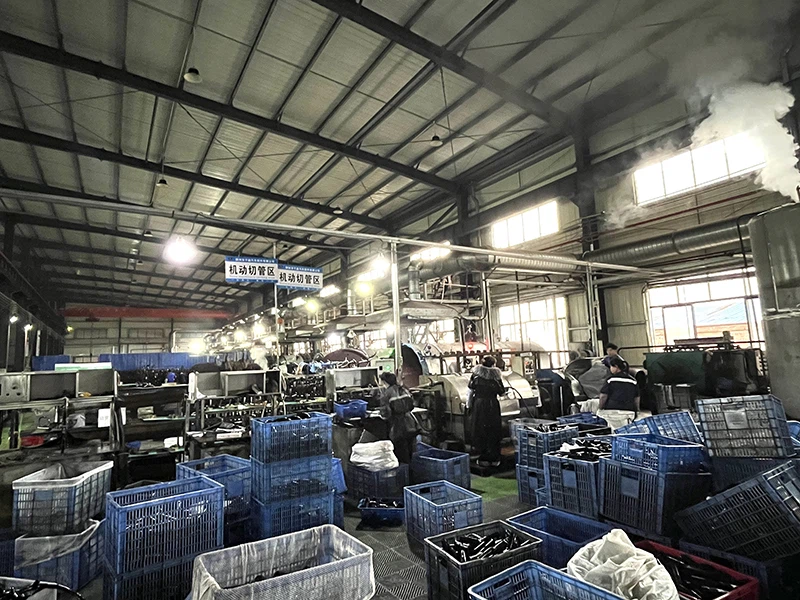
By implementing strict quality management controls across every stage—from polymer raw compound verification to the final helium leak detection test—Autowellix ensures that every dynamic line can withstand the demanding conditions of automotive applications.
Standard aftermarket lines often suffer early ozone cracking or thermo-oxidative breakdown. True OEM-level manufacturing demands distinct material architecture engineered for structural integrity.
| Material Compound | Continuous Working Temp | Ozone Resistance rating | Permeation Resistance | Common Automotive Usage |
|---|---|---|---|---|
| EPDM (Peroxide Cured) | -40°C to +135°C | Excellent (Exceeds 72h @100pphm) | Moderate (Excellent for air/glycol) | Standard Engine Vacuum Boosters, Radiator Hoses |
| PA 12 (Polyamide 12) | -40°C to +120°C | Outstanding | High (Exceptional barrier property) | Rigid Electric Vacuum Pump (EVP) Lines, Fuel Lines |
| Silicone Rubber (VMQ - Multi-ply) | -50°C to +200°C | Excellent | Low (Highly porous to hydrocarbons) | Turbocharged Coolant, High-Performance Air Intakes |
| NBR / PVC Blend | -35°C to +110°C | Good | High (Resists fuel vapors) | Crankcase Ventilation, Oil Cooler Pipes |
For high-reliability braking, peroxide-cured EPDM reinforced with high-density synthetic fiber (e.g., Aramid or Polyester) is the industry benchmark. Unlike sulfur-cured elastomers, peroxide cross-linking builds carbon-carbon bonds that offer superior thermal stability, ensuring the pipe does not soften or collapse when vacuum levels drop to -0.9 bar. In hybrid or electric vehicle configurations where the internal combustion engine is absent or cycles off, hard multi-layer polyamide (PA) tubes are thermoformed with quick connectors to interface with Electric Vacuum Pumps (EVP).
Autowellix is committed to providing durable, reliable, and high‑performance automotive piping systems that withstand extreme temperatures, high pressures, and rigorous driving conditions. Its products are widely used in passenger vehicles, commercial automobiles, and aftermarket applications worldwide. With strict quality control processes, from material selection to final inspection, Autowellix ensures every product delivers excellent service life and safety performance.
Through its optimized supply chain and precision engineering, the company supports major global distributors and Tier-1 integrators, providing solutions tailored to regional environment profiles—from sub-zero Arctic zones to humid tropical climates.
Heavy duty trucks and SUVs require larger booster chambers, necessitating vacuum assemblies with wider inner diameters (IDs of 12mm to 15mm) and high burst pressure specifications to manage fluctuating load parameters.
Strict focus on REACH/RoHS compliance. Eliminating toxic plasticizers and heavy metals from the EPDM and nylon compounding phase is critical to meeting EU automotive supplier regulations.
Equatorial markets require specialized UV-stabilizers and antiozonants mixed within outer covers to protect structural Integrity from ozone-induced cracking in intense heat zones.
Dedicated to customer satisfaction, Shenzhen Autowellix Autoparts Co., Ltd. supports OEM and customized solutions, providing tailored services to meet diverse market needs. The company’s global sales network and professional support teams enable efficient cooperation with partners across Europe, the Americas, Southeast Asia, and beyond, making Autowellix a trusted name in automotive fluid line manufacturing and supply.
Whether you require strict compliance with private labels, custom bending angles for complex engine bays, or pre-assembled check valves and quick-disconnect fittings, their production lines can scale from small prototype runs to volume production.
The rise of battery electric vehicles (BEVs) and plug-in hybrid electric vehicles (PHEVs) introduces a unique challenge: the absence of a throttle-regulated intake manifold to generate natural engine vacuum. To preserve pneumatic brake amplification, EV architectures rely on standalone Electric Vacuum Pumps (EVPs).
This dynamic shifts the technical specifications of the vacuum pipe assembly. Modern EV lines require higher acoustic insulation properties to prevent the vibration and noise of the electric pump from translating into the passenger cabin. Multi-layer plastic constructions utilizing thermoplastic elastomers (TPE) and integrated resonators are replacing traditional heavy rubber lines, offering weight reduction and improved NVH (Noise, Vibration, and Harshness) performance.
By using structured flexible sleeves and customized rubber dampening blocks, Autowellix designs modern vacuum line systems that isolate dynamic pump vibrations, preventing noise transfer to the firewall and cabin.
Advanced polyamide thin-walled thermoformed lines reduce system mass by up to 45% compared to traditional reinforced rubber hoses, supporting vehicle range extension.
Key specifications and installation guidelines for automotive vacuum line systems.
 Autowellix Autoparts